

Ten gigabit networking used to mean expensive enterprise hardware, but recent chips brought these blazing speeds directly to standard desktop motherboards. I spent hours reading through buyer feedback and comparing technical specifications so I could rank these options. In my view, pairing your motherboard with a proper PCIe network card transforms how you move large files across a local network. Let us jump straight into the ranked list to see which adapter deserves a slot in your machine.
1. BrosTrend 10GB PCIe Network Card for PC Desktop Gaming, Lifetime Protection | Windows 11/10 & Server 2022, Plug & Play Linux (Kernel 6.16+), PCIe 4.0 x1 to 10 Gigabit Ethernet Adapter, Extra Low-Profile

BrosTrend earned its spot on my radar because of its lifetime protection, which offers serious peace of mind for anyone worried about hardware longevity. If you want a brand that stands firmly behind its physical build, this card checks that crucial box.
I think the extra low-profile bracket included in the box is a thoughtful touch for compact builds. You also get robust Plug and Play Linux support right out of the box for recent kernels, which saves you from tedious driver hunts.
Buyers consistently point to the PCIe 4.0 x1 interface as an easy way to add speed without eating up massive lane bandwidth. But remember that maintaining high transfer speeds requires an adequate Cat6a cable and a matching switch. I would suggest this unit if long-term manufacturer support matters more to you than saving a few dollars.
Users appreciate the inclusion of both standard and low-profile brackets for versatile chassis installation.
Several buyers mention that the card maintains stable connections during heavy file transfers.
The lack of advanced software configuration tools makes it straightforward for basic setups.
Get It From Amazon Now: Check Price on Amazon & FREE Returns
2. NICGIGA 10Gb PCIe 4.0 x1 Network Card, Realtek RTL8127 Ethernet Adapter. | 10G/5G/2.5G/1G RJ45 Multi-Gigabit LAN NIC, Support Windows 10/11/Server, Linux, NAS, Low Profile Bracket
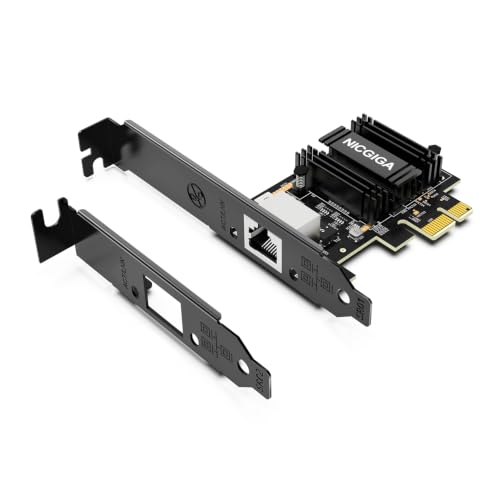
This option suits power users and home lab builders who demand maximum multi-gigabit flexibility without paying enterprise prices. In my estimation, this is the absolute best overall multi-gigabit adapter available right now.
The Realtek RTL8127 controller provides reliable handshakes across various speeds, adapting seamlessly to slower legacy switches if needed. I consider this the one I would point most people toward because it hits the sweet spot between price and raw performance.
You get solid support for modern operating systems like Windows 11 and various Linux distributions. Keep in mind that ten-gigabit adapters run warm, so you need decent case airflow to prevent thermal throttling during massive backups.
Reviewers frequently highlight the easy setup process on standard Windows and Linux machines.
The multi-speed fallback capability receives high marks from users upgrading older network switches gradually.
A few buyers note that the heatsink gets quite warm during extended high-load operations.
Get It From Amazon Now: Check Price on Amazon & FREE Returns
3. 10Gb PCIe Network Card with Intel X540-T2 Controller, Dual Port 10GBase-T | VunLink 10Gbps RJ45 Ethernet NIC Adapter, PCI Express x8/x16 Server NIC, 10 Gigabit LAN Card for NAS, Windows, Linux, VMware
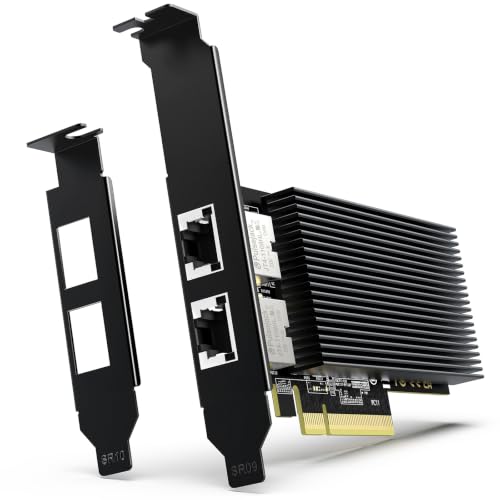
A dual-port layout on an x1 interface sounds impossible, but this card utilizes a wide PCI Express x8 slot to deliver two fully independent channels. That unexpected architectural choice makes it a fascinating option for heavy server environments.
I find the Intel X540-T2 controller particularly appealing for virtualized setups running VMware or complex Linux hypervisors. Having dual 10GBase-T ports means you can aggregate links or bridge two separate subnets directly from one physical card.
The enterprise pedigree of the controller gives me great confidence in its stability under pressure. But be warned that this card demands physical space and explicit server grade cooling to manage its significant power draw.
Network administrators praise the native compatibility with enterprise hypervisors and specialized operating systems.
The dual ports allow for flexible link aggregation and redundant network paths.
Users mention that the physical card length requires a spacious desktop or rackmount chassis.
Get It From Amazon Now: Check Price on Amazon & FREE Returns
4. BZIZU 10Gb PCIe Network Card, Realtek RTL8127 10G RJ45 Ethernet Adapter | For NAS, router & home server. 10GBASE-T NIC, under 4W, PCIe 4.0 x1, low-profile bracket incl. Win 11/10, Linux, FreeBSD
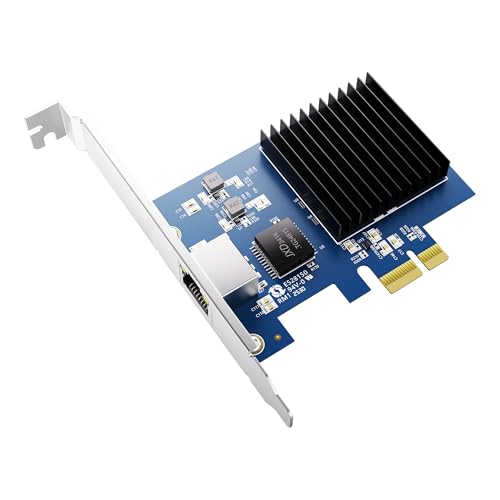
The most common buyer complaint about ten-gigabit networking hardware centers on excessive heat generation and high power consumption. BZIZU tackles that exact issue by engineering a card that draws under 4W of power, which changes the math for compact home servers.
I appreciate how this low-power design reduces thermal stress inside cramped router boxes and quiet media storage units. The Realtek RTL8127 chip keeps energy usage remarkably low while still delivering full 10GBASE-T throughput over standard copper cables.
You still get the benefits of a low-profile bracket bundled in the package for slim cases. I would rank this near the top for anyone building a power-conscious home lab that runs twenty-four hours a day.
Buyers frequently mention the impressively low operating temperatures compared to older enterprise cards.
The included low-profile bracket receives praise for fitting snugly into compact server chassis.
Some users report needing manual driver updates on specific niche Linux distributions.
Get It From Amazon Now: Check Price on Amazon & FREE Returns
5. 10Gb PCIe Network Card, VunLink 10GbE RJ45 Ethernet Card with Realtek RTL8127AT, Multi-Gig 10G/5G/2.5G/1G NIC Adapter for PC, NAS & Server, PCIe 4.0 x1, Windows 10/11/Linux

Comparing this directly to the BZIZU card reveals a very similar internal architecture, yet this model leans harder into standard desktop workstation duties. Where its sibling focuses heavily on power efficiency, this VunLink variant prioritizes raw, uncompromised workstation connectivity.
I view this choice as a dependable workhorse for video editors and data hoarders who move massive project files daily. The Realtek RTL8127AT controller handles fluctuating loads gracefully when jumping between multi-gigabit switches.
Installation is straightforward on modern systems running current versions of Windows and Linux. Just ensure your motherboard has an open PCIe 4.0 x1 slot positioned away from your graphics card to avoid thermal crowding.
Users highlight the reliable link speeds when connecting directly to high-end network-attached storage devices.
The plug-and-play behavior on modern operating systems earns consistent praise from builders.
A few reviewers note that the included heatsink design leaves little room for error in tight builds.
Get It From Amazon Now: Check Price on Amazon & FREE Returns
6. 10G Dual RJ45 Port PCI-E Network Card, with X540 Controller, Gigaplus X540-T2 10Gb Ethernet Adapter with 2 10Gbe NIC, Support Windows/Linux/ESX Servers

This card built its reputation in the aftermarket as a budget-friendly route to genuine enterprise redundancy. That market angle holds up surprisingly well when you examine how it handles heavy enterprise backup routines.
I think the dual RJ45 ports make it an ideal candidate for routing dedicated backup traffic away from your primary network. The proven X540 controller brings mature drivers and reliable performance to demanding server racks.
You get robust compatibility across legacy server editions and modern hypervisors alike. But remember that older Intel chips draw substantial power, meaning your power supply and case fans need to handle the extra thermal load.
IT professionals note that the dual ports simplify setting up dedicated storage network backplanes.
Buyers appreciate the stable driver support across older server operating systems.
Several reviews mention that the card runs noticeably hotter than newer single-chip alternatives.
Get It From Amazon Now: Check Price on Amazon & FREE Returns
Choosing Between Them
My top recommendation is the NICGIGA 10Gb PCIe 4.0 x1 Network Card because its Realtek RTL8127 controller balances modern multi-gigabit speeds with wide compatibility. If you want something tailored for standard desktop use, the VunLink workstation card makes a fine companion, while the BrosTrend option suits buyers who value long-term manufacturer support. For low-power home servers, the BZIZU adapter shines, leaving the dual-port Intel-based cards better suited for heavy enterprise backup duties and complex lab environments.
Keep in mind that adding ten-gigabit networking to your setup introduces unique hardware challenges that go beyond simply plugging in a card. Every single option on this list requires a proper PCIe slot with adequate bandwidth and good case ventilation to prevent thermal throttling during sustained data transfers.
As an Amazon Associate, this site earns from qualifying purchases. Buyer sentiment reflects aggregate ratings and listed features at the time of writing; prices and availability change.

James Morris is a passionate writer and researcher who explores Norse culture, Viking history, mythology, and related products to create helpful guides and reviews for readers.
