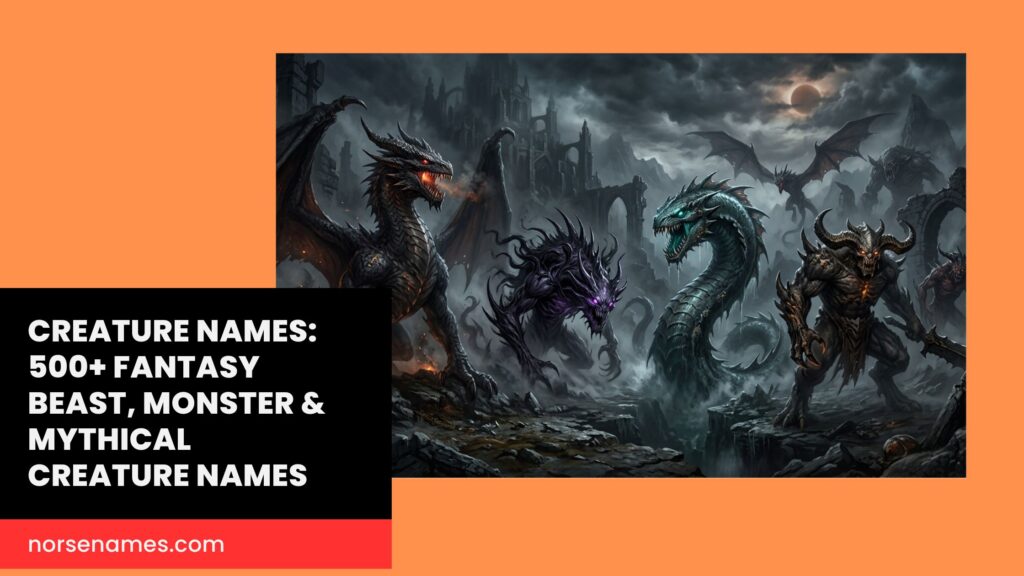

Every great fantasy world begins with a name. Before the first spell is cast, before the first sword is drawn, before the first kingdom rises from the ash and stone — there is a name. And nowhere does naming carry more weight than when you are conjuring creatures from the void of imagination. Creature names are not mere labels. They are declarations. They are warnings. They are the sound a thing makes when it steps into the world and demands to be remembered.
Whether you are building a campaign for D&D, crafting the next great fantasy novel, or designing a game world that will leave players breathless, the names you give to your creatures define their entire existence. A creature called Vorreth the Hollow speaks of emptiness, ancient hunger, and dread. A creature called Lyssara speaks of beauty that hides a blade. The name arrives before the monster does — and it sets every expectation.
This guide is built for storytellers who take their craft seriously. Inside, you will find hundreds of fantasy creature names organized by type, tone, and lore tradition. You will also find naming philosophy, cultural frameworks, and enough inspiration to fill ten bestiaries. Whether your creatures are noble beasts, dark horrors, or something that defies easy classification, there is a name waiting here for them.
Let the naming begin.
Famous Creature Names From Literature and Games
Before building your own bestiary, it helps to study the masters. The greatest fantasy universes in history did not name their creatures randomly. Every famous creature name was chosen with intention — to evoke a specific emotion, suggest a specific origin, and make that creature unforgettable.
Smaug from Tolkien’s The Hobbit is perhaps the most iconic creature name ever written. Short, sharp, heavy with consonants — the name itself sounds like fire dragging across stone. It is regal, dangerous, and ancient. Tolkien constructed it from Old Norse roots, giving the dragon linguistic ancestry that reinforced his worldbuilding.
Grendel from Beowulf is another masterwork of creature naming. The name carries weight without needing explanation. It sounds wrong in the mouth — guttural and broken — which perfectly mirrors the creature’s role as an outsider, a thing that exists outside the light of civilization. Grendel’s name is rejection made into sound.
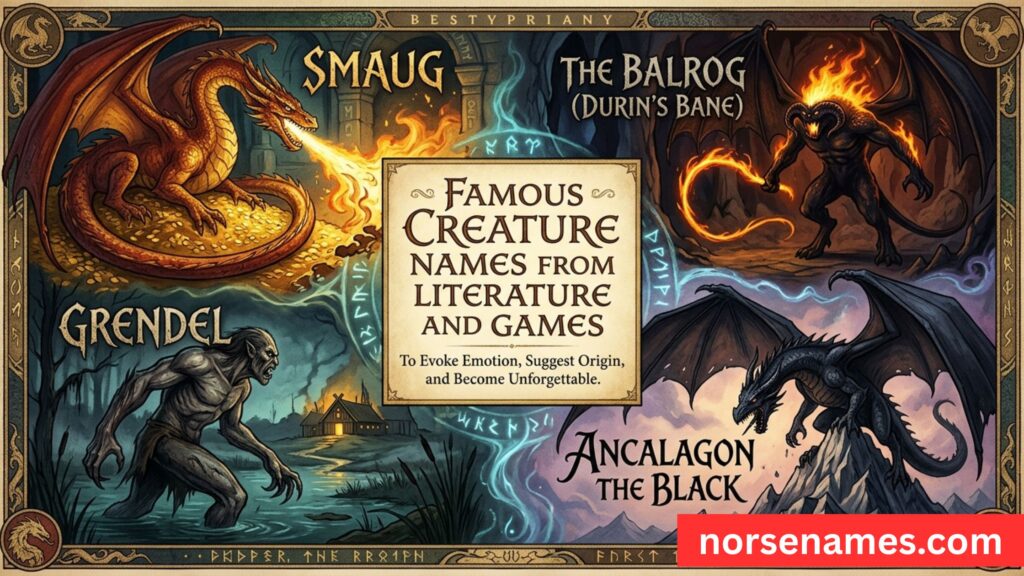
Ancalagon the Black, also from Tolkien’s lore, demonstrates how a creature name can build mythology by itself. The mere length and gravity of it signals that this is no ordinary beast — this is a creature that broke mountains. Long, rolling names with hard stops suggest something colossal.
The Balrog — or more specifically, Durin’s Bane — shows that sometimes a creature name functions as a title rather than a personal identifier, and that anonymity can amplify terror. You do not need to know its personal name. You only need to know what it is.
These examples teach us something essential: the best creature names serve the story. They fit the creature’s role, reflect its nature, and stay in the reader’s memory long after the page is turned.
Male Creature Names
Male creature names often carry harder edges — deep consonants, abrupt endings, and sounds that suggest weight and force. These names work for everything from ancient dragons to forest beasts, dungeon guardians, and chaos entities.
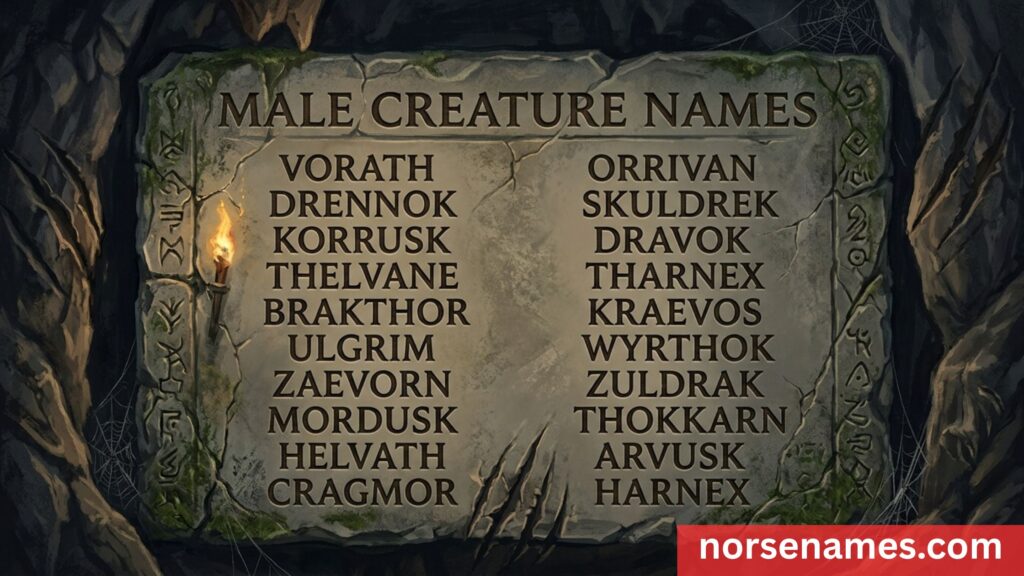
- Vorath
- Drennok
- Korrusk
- Thelvane
- Brakthor
- Ulgrim
- Zaevorn
- Mordusk
- Helvath
- Cragmor
- Yenthok
- Orrivan
- Skuldrek
- Vorreth
- Dravok
- Tharnex
- Gulgaar
- Kraevos
- Nekthar
- Wyrthok
- Brannusk
- Olveth
- Zuldrak
- Thokkarn
- Arvusk
- Dremolk
- Skethvar
- Vorvaan
- Harnex
- Cressolk
Female Creature Names
Female creature names can carry elegance, menace, or something in between — a silk-wrapped danger that is often more unsettling than brute force. These names suit serpents, sorceresses-turned-beasts, fae predators, and anything that hunts with patience rather than power.
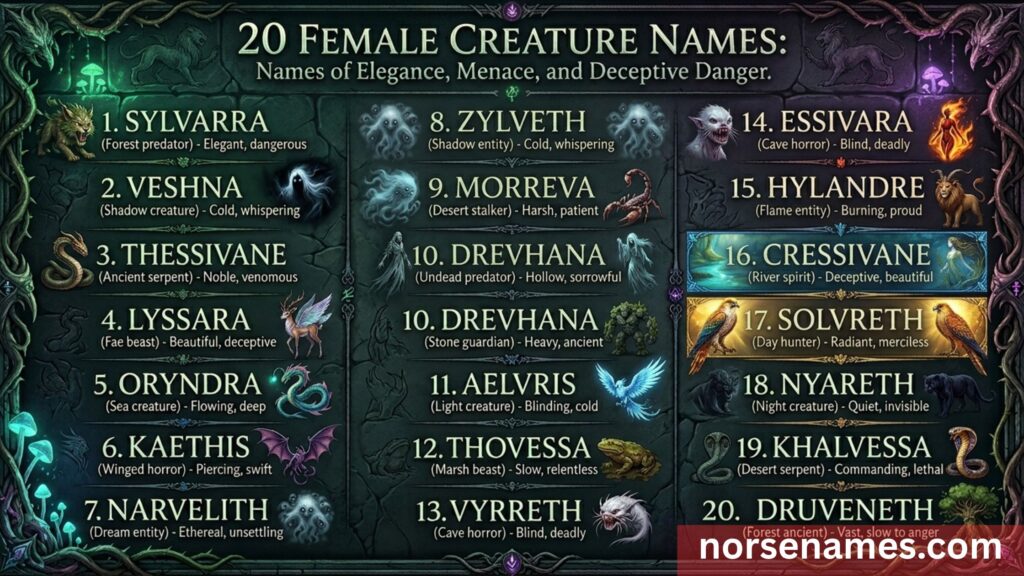
| Name | Suggested Type | Tone |
|---|---|---|
| Sylvarra | Forest predator | Elegant, dangerous |
| Veshna | Shadow creature | Cold, whispering |
| Thessivane | Ancient serpent | Noble, venomous |
| Lyssara | Fae beast | Beautiful, deceptive |
| Oryndra | Sea creature | Flowing, deep |
| Kaethis | Winged horror | Piercing, swift |
| Narvelith | Dream entity | Ethereal, unsettling |
| Zylveth | Desert stalker | Harsh, patient |
| Morreva | Undead predator | Hollow, sorrowful |
| Drevhana | Stone guardian | Heavy, ancient |
| Aelvris | Light creature | Blinding, cold |
| Thovessa | Marsh beast | Slow, relentless |
| Vyrreth | Cave horror | Blind, deadly |
| Essivara | Flame entity | Burning, proud |
| Hylandre | Mountain beast | Wild, regal |
| Cressivane | River spirit | Deceptive, beautiful |
| Solvreth | Day hunter | Radiant, merciless |
| Nyareth | Night creature | Quiet, invisible |
| Khalvessa | Desert serpent | Commanding, lethal |
| Druveneth | Forest ancient | Vast, slow to anger |
Cool and Unique Creature Names
Sometimes a creature needs a name that simply stops a reader cold — something that feels original, unexpected, and impossible to confuse with anything else. These cool creature names are built for maximum impact and minimum familiarity.
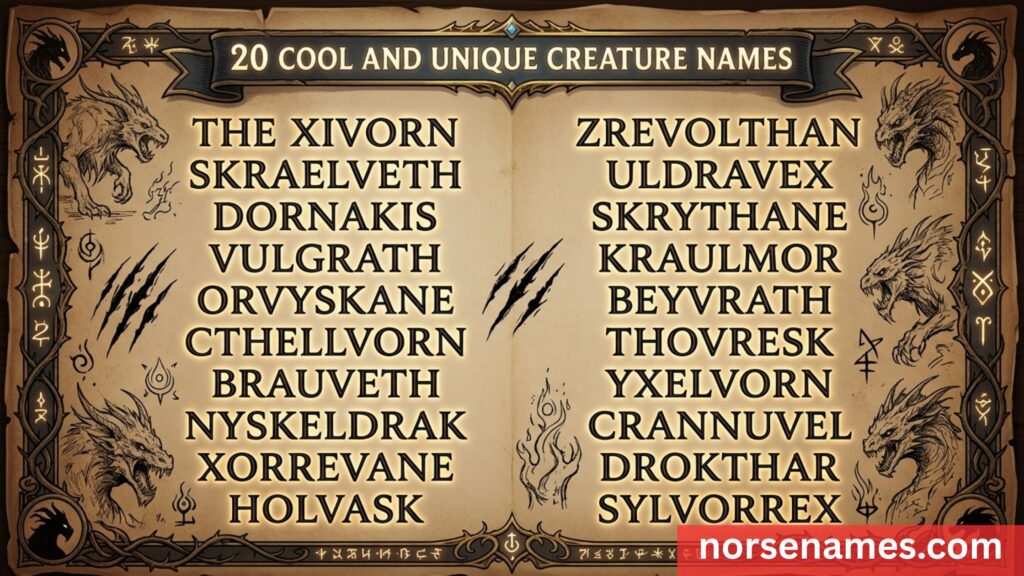
- Thexivorn
- Skraelveth
- Dornakis
- Vulgrath
- Orvyskane
- Cthellvorn
- Brauveth
- Nyskeldrak
- Xorrevane
- Holvask
- Zrevolthan
- Uldravex
- Skrythane
- Kraulmor
- Beyvrath
- Thovresk
- Yxelvorn
- Crannuvel
- Drokthar
- Sylvorrex
- Bleth
- Quarrvash
- Thrennok
- Golvethrix
- Avyrsk
Mythical Creature Names: Drawing From the Deep Well of Legend
Mythical creature names carry a different kind of gravity than invented ones. They arrive pre-loaded with centuries of cultural weight, symbolic meaning, and narrative expectation. When you borrow from mythology — or build names that feel mythologically grounded — you tap into something readers recognize at a bone-deep level even if they cannot articulate why.
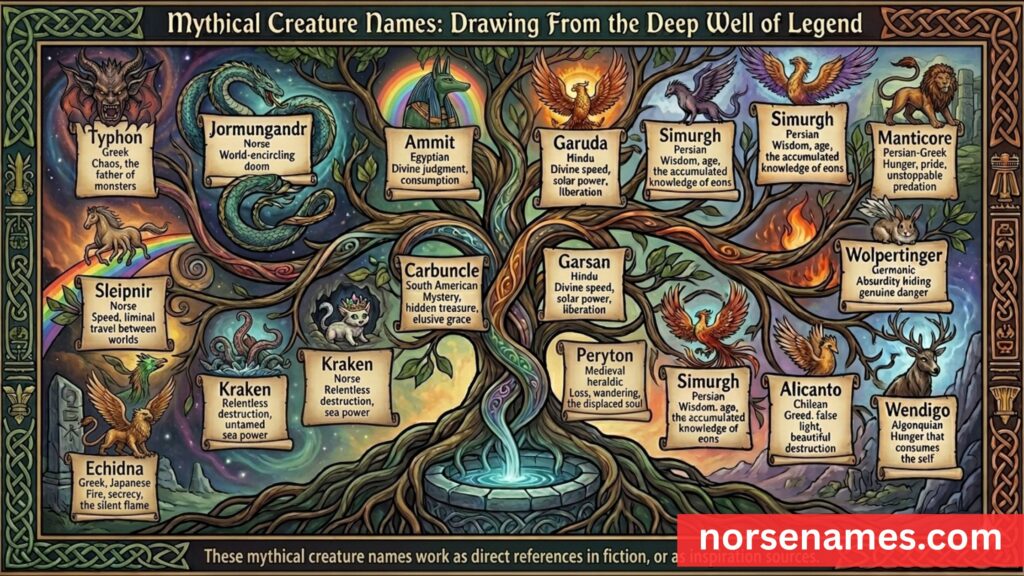
| Mythical Name | Origin Tradition | Core Symbolism |
|---|---|---|
| Typhon | Greek | Chaos, the father of monsters |
| Jormungandr | Norse | World-encircling doom |
| Ammit | Egyptian | Divine judgment, consumption |
| Baku | Japanese | Dream-devouring, mercy and terror |
| Manticore | Persian-Greek | Hunger, pride, unstoppable predation |
| Sleipnir | Norse | Speed, liminal travel between worlds |
| Carbuncle | South American | Mystery, hidden treasure, elusive grace |
| Garuda | Hindu | Divine speed, solar power, liberation |
| Peryton | Medieval heraldic | Loss, wandering, the displaced soul |
| Simurgh | Persian | Wisdom, age, the accumulated knowledge of eons |
| Echidna | Greek | The mother of all horrors, origin |
| Basan | Japanese | Fire, secrecy, the silent flame |
| Wolpertinger | Germanic | Absurdity hiding genuine danger |
| Alicanto | Chilean | Greed, false light, beautiful destruction |
| Wendigo | Algonquian | Hunger that consumes the self |
These mythical creature names work as direct references in fiction, or as inspiration for renamed versions. You do not need to call your creature a Wendigo — but if you study what the Wendigo represents and build a name that carries the same hollow hunger in its syllables, you have created something that resonates without borrowing.
Creature Names Ideas: Inspiration Across Every Fantasy Setting
Good creature names ideas can come from anywhere — the sound of wind through a cave mouth, the name of a geological feature, the Latin root of a disease, the way a particular language handles compound words. The trick is training yourself to hear potential names in unexpected places.
Here is a broad collection of creature names ideas organized by the kind of world they best inhabit.
For Dark Fantasy and Horror Settings:
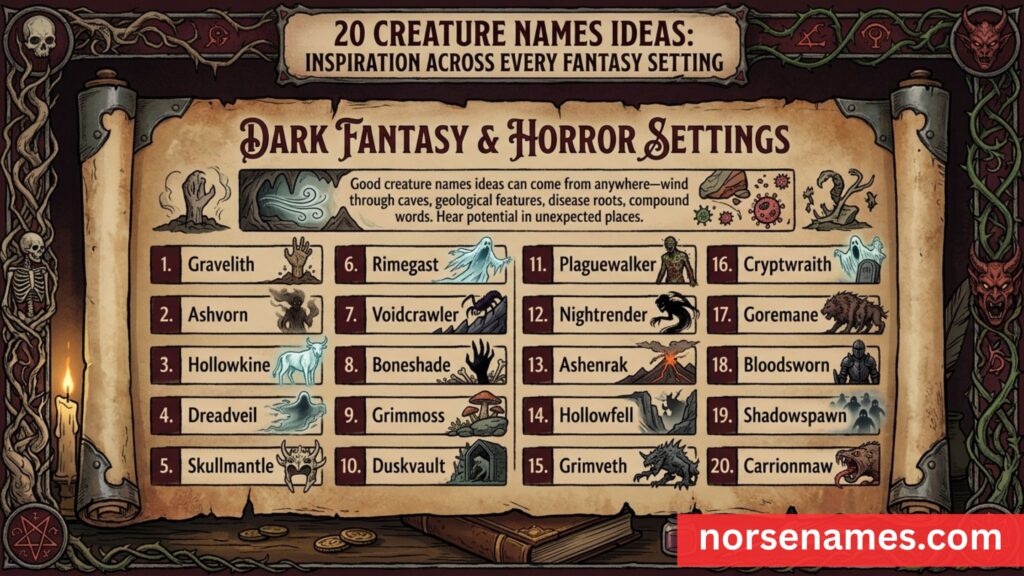
- Gravelith
- Ashvorn
- Hollowkine
- Dreadveil
- Skullmantle
- Rimegast
- Voidcrawler
- Boneshade
- Grimmoss
- Duskvault
- Plaguewalker
- Nightrender
- Ashenrak
- Hollowfell
- Grimveth
For High Fantasy and Epic Settings:
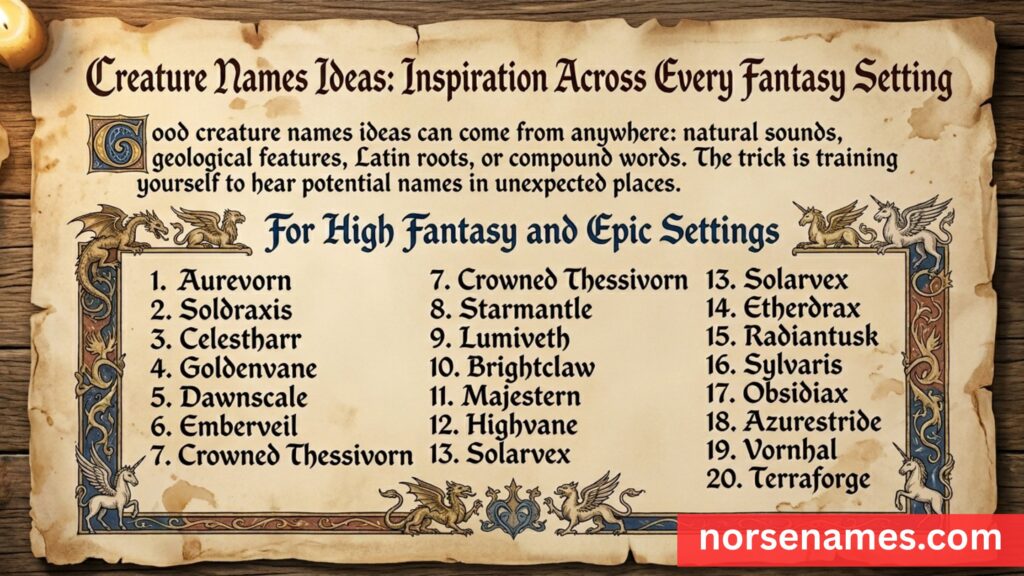
- Aurevorn
- Soldraxis
- Celestharr
- Goldenvane
- Dawnscale
- Emberveil
- Crowned Thessivorn
- Starmantle
- Lumiveth
- Brightclaw
- Majestern
- Highvane
- Solarvex
- Etherdrax
- Radiantusk
For Wilderness and Nature-Based Settings:
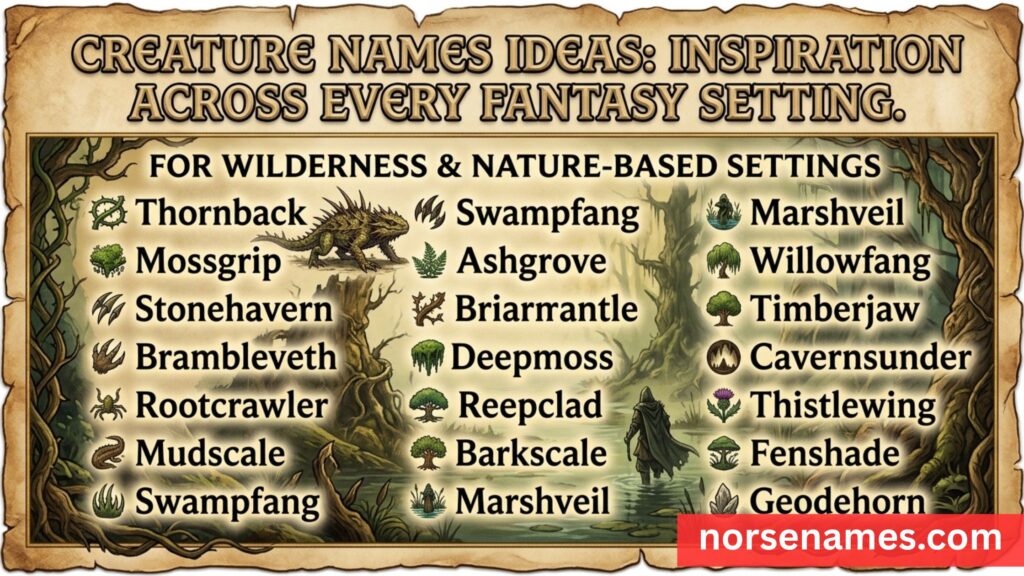
- Thornback
- Mossgrip
- Stonehavern
- Brambleveth
- Rootcrawler
- Mudscale
- Swampfang
- Fernwalker
- Ashgrove
- Briarmantle
- Deepmoss
- Riverclad
- Barkscale
- Marshveil
- Willowfang
Mythical Creature Name Ideas: Fresh Takes on Ancient Archetypes
The challenge with mythical creature name ideas is walking the line between resonance and originality. Lean too far toward the familiar and your creature feels derivative. Lean too far toward the invented and it loses the gravity that mythological naming provides. The sweet spot is a name that sounds like it could have existed in an ancient text — something a scholar might have translated from a crumbling manuscript.
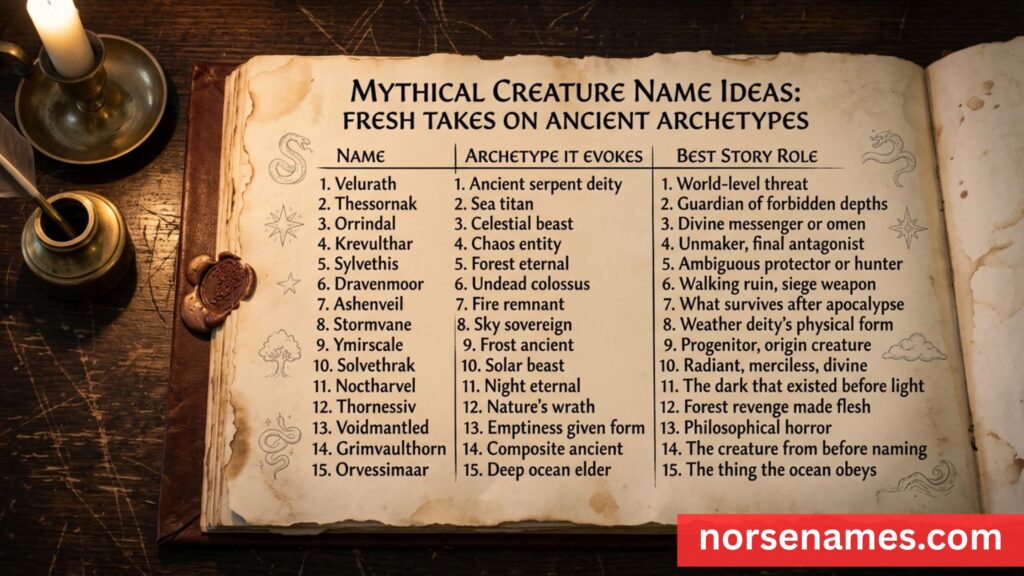
These mythical creature name ideas are built to feel discovered rather than invented.
| Name | Archetype It Evokes | Best Story Role |
|---|---|---|
| Velurath | Ancient serpent deity | World-level threat |
| Thessornak | Sea titan | Guardian of forbidden depths |
| Orrindal | Celestial beast | Divine messenger or omen |
| Krevulthar | Chaos entity | Unmaker, final antagonist |
| Sylvethis | Forest eternal | Ambiguous protector or hunter |
| Dravenmoor | Undead colossus | Walking ruin, siege weapon |
| Ashenveil | Fire remnant | What survives after apocalypse |
| Stormvane | Sky sovereign | Weather deity’s physical form |
| Ymirscale | Frost ancient | Progenitor, origin creature |
| Solvethrak | Solar beast | Radiant, merciless, divine |
| Noctharvel | Night eternal | The dark that existed before light |
| Thornessiv | Nature’s wrath | Forest revenge made flesh |
| Voidmantled | Emptiness given form | Philosophical horror |
| Grimvaulthorn | Composite ancient | The creature from before naming |
| Orvessimaar | Deep ocean elder | The thing the ocean obeys |
Mythical Creature Names Male: Power, Terror, and Ancient Majesty
Mythical creature names with a masculine energy often lean into weight, command, and ancient authority. These are names that feel like they belong to something that has existed since before the current age of the world — names that carry histories longer than any civilization that might fear them.
- Thorruvex
- Karveldrak
- Uldramorr
- Vorrithank
- Skeldravos
- Drennokthar
- Bolvethrix
- Grannemaar
- Thyrandrax
- Vorvusk
- Krulventhor
- Orriskane
- Helvrathar
- Zuldrakmorr
- Skraevorn
- Dravothusk
- Kardrevane
- Ulgrimvex
- Thessoldrax
- Velthorusk
- Yrthankane
- Brauvethrix
- Skaldromaar
- Drevolthan
- Krennuskvar
- Thornveldrak
- Orruvethis
- Grimmankhor
- Bolvashdrax
- Vyrranthor
Mythical Creatures List A–Z: The Essential Fantasy Bestiary Reference
Every worldbuilder needs a foundational reference — a starting alphabet of creature types that covers the range of fantasy possibility. This mythical creatures list organized from A to Z serves as both a naming guide and a taxonomy of the imagination.
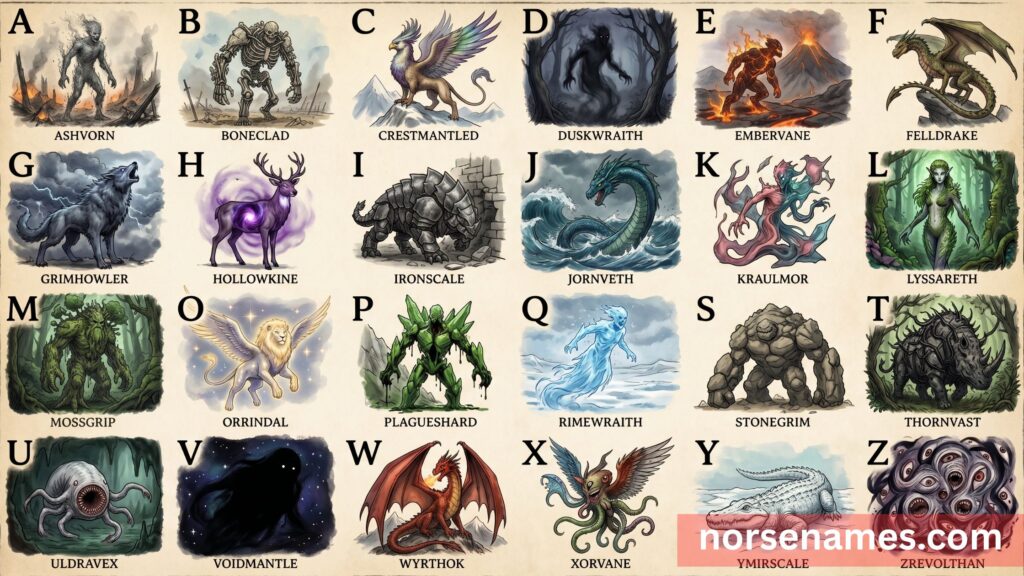
| Letter | Creature Name | Type | Role in Fantasy Lore |
|---|---|---|---|
| A | Ashvorn | Elemental remnant | Survivor of consumed worlds |
| B | Boneclad | Undead colossus | Walking fortress of death |
| C | Crestmantled | Noble beast | Guardian of sacred high places |
| D | Duskwraith | Shadow entity | Predator between day and night |
| E | Embervane | Fire creature | Messenger of volcanic gods |
| F | Felldrake | Lesser dragon kin | Regional apex predator |
| G | Grimhowler | Storm beast | Harbinger of catastrophic weather |
| H | Hollowkine | Void-touched | Creatures emptied by dark magic |
| I | Ironscale | Armored titan | Near-invulnerable siege beast |
| J | Jornveth | Sea serpent | Ancient ocean territorial |
| K | Kraulmor | Chaos entity | Unbound destructive force |
| L | Lyssareth | Fae predator | Beautiful, lethal, deceptive |
| M | Mossgrip | Nature ancient | The forest’s slow, patient hunger |
| N | Nightclad | Invisible stalker | Predator of absolute darkness |
| O | Orrindal | Celestial beast | Divine herald or punishment |
| P | Plagueshard | Disease entity | Walking biological catastrophe |
| Q | Quarrelvex | Stone elemental | Mountain-born territorial |
| R | Rimewraith | Ice spirit | Cold that persists beyond winter |
| S | Stonegrim | Earth colossus | Ancient geological guardian |
| T | Thornvast | Forest endurance beast | Creature that outlasts everything |
| U | Uldravex | Deep horror | What lives beneath all foundations |
| V | Voidmantle | Emptiness entity | The hunger that predates existence |
| W | Wyrthok | Classic dragon kin | The archetypal winged fire-bearer |
| X | Xorvane | Chaos-touched | Creature of impossible biology |
| Y | Ymirscale | Frost ancient | Progenitor of cold-blooded kinds |
| Z | Zrevolthan | Elder horror | The thing that should not be named |
Fantasy Creature Name Ideas: Building Worlds One Name at a Time
Fantasy creature name ideas are most powerful when they are generated with a specific world in mind. A name that works perfectly in a grim dark setting will feel wrong in a sunlit high fantasy epic. Before choosing a name, ask what kind of world your creature inhabits — and let that world’s logic guide the sound.
For Grim Dark Worlds: Lead with decay, emptiness, and weight. Names like Ashvault, Grimrender, Hollowvein, Bonemantle, Dreadscale, Plagueveth, Skullgrim, and Nightrender carry the right texture of hopelessness and danger.
For High Magic Worlds: Allow names to carry wonder alongside threat. Aureveth, Soldraxis, Lumivorn, Starmantled, Celestharrak, Goldenvane, Radiantusk, and Brightfell suggest creatures that are awe-inspiring even when dangerous.
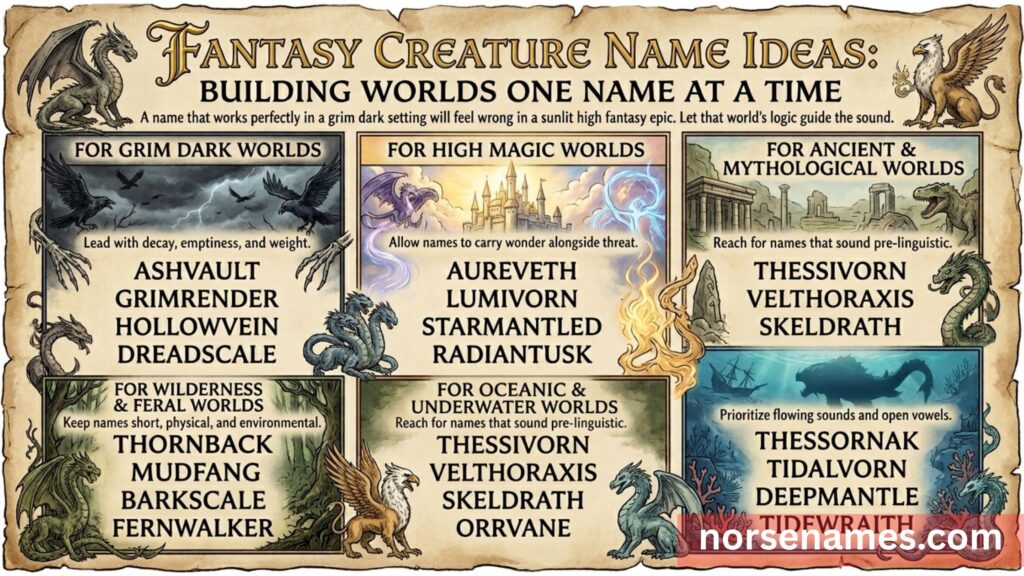
For Ancient and Mythological Worlds: Reach for names that sound pre-linguistic — sounds that feel carved rather than spoken. Uldramoss, Velthoraxis, Thessivorn, Skeldrath, Orrvane, Kraevoth, and Thyrandrek carry that quality of something older than the world’s current age.
For Wilderness and Feral Worlds: Keep names short, physical, and environmental. Thornback, Mudfang, Swampclad, Barkscale, Rootveth, Bramblegrim, Marshvorn, and Fernwalker all root the creature in its habitat immediately.
For Oceanic and Underwater Worlds: Prioritize flowing sounds and open vowels. Thessornak, Orvessimaar, Jornveth, Tidalvorn, Deepmantle, Abyssalveth, Coralscale, and Tidewraith carry the rolling weight of deep water.
Mythical Creature Name Ideas Female: Grace, Power, and Ancient Terror
Female mythical creature names carry a specific kind of power — one that does not announce itself loudly but makes itself felt in the silence after. The greatest female creature names in fantasy lore suggest depth, patience, and a danger that is not diminished by elegance. These mythical creature name ideas for female creatures are built to be unforgettable.
- Thessivane
- Nyarelveth
- Solvrethis
- Khaelvessa
- Vyrreneth
- Oryndravane
- Sylvethara
- Morrelvith
- Drevhanaul
- Aelvriseth
- Cressivorna
- Thyranvessa
- Lyssaravan
- Essivorna
- Vorrevane
- Nalvethissa
- Hylandreveth
- Skyrethana
- Druvenessiv
- Thovessivane
- Vyrrethalis
- Kaethissorna
- Narvelitha
- Orrindaveth
- Zylvethrana
- Myrrevane
- Selessorith
- Aethvessina
- Crystallveth
- Evrenorissa
These names carry the right balance of beauty and menace. Thessivane sounds ancient and commanding. Lyssaravan sounds like something that lures travelers off safe roads. Vyrrethalis sounds like a creature that has never once been seen by anyone who survived the encounter. That is the goal — a name that does the storytelling before the first sentence of description is written.
Warrior and Badass Creature Names
Some creature names are built to inspire fear the moment they are spoken. Whether you’re creating brutal warlords, ancient beasts, monstrous champions, or savage fantasy races, the right name gives your creature instant presence and power. Warrior and badass creature names often combine harsh consonants, primal sounds, and mythic themes that feel aggressive, dominant, and unforgettable.
From battlefield titans and cursed predators to legendary dungeon bosses, these names help shape the identity of your world’s fiercest beings. A strong creature name can hint at savage strength, dark magic, tribal origins, or ancient bloodlines — turning a simple monster into a memorable force within your story, game, or campaign.
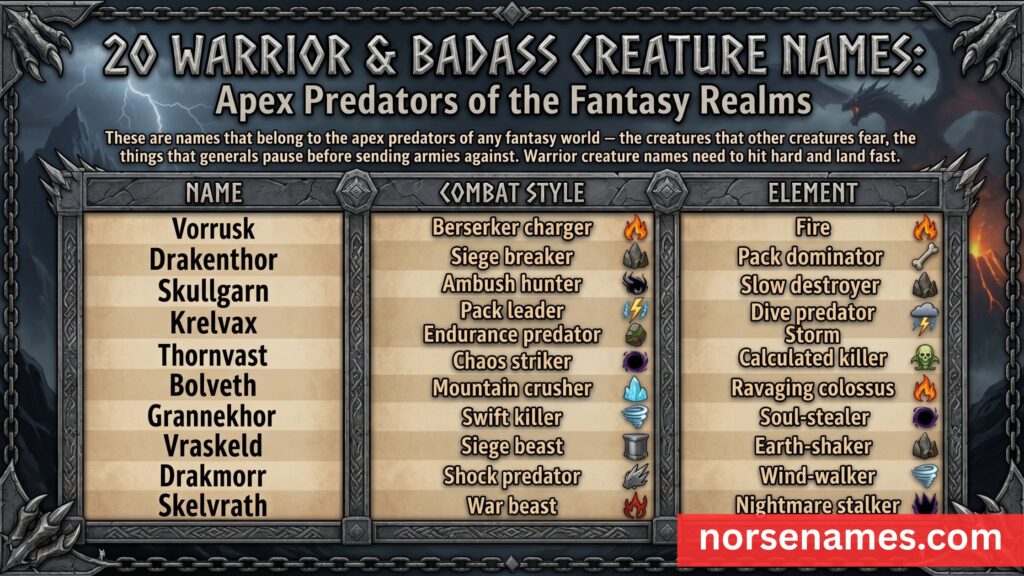
| Name | Combat Style | Element |
|---|---|---|
| Vorrusk | Berserker charger | Fire |
| Drakenthor | Siege breaker | Stone |
| Skullgarn | Ambush hunter | Shadow |
| Krelvax | Pack leader | Lightning |
| Thornvast | Endurance predator | Earth |
| Bolveth | Chaos striker | Void |
| Grannekhor | Mountain crusher | Ice |
| Vraskeld | Swift killer | Wind |
| Drakmorr | Siege beast | Iron |
| Skelvrath | Shock predator | Darkness |
| Karrvox | War beast | Blood |
| Thrennak | Pack dominator | Bone |
| Ulgrevath | Slow destroyer | Stone |
| Raknuvel | Dive predator | Storm |
| Corvysk | Calculated killer | Plague |
Royal and Noble Creature Names
Not all fantasy creatures are savage. Some are crowned. Some rule. Noble creature names carry grandeur — they are long enough to suggest history, elegant enough to suggest power, and heavy enough to suggest consequence.
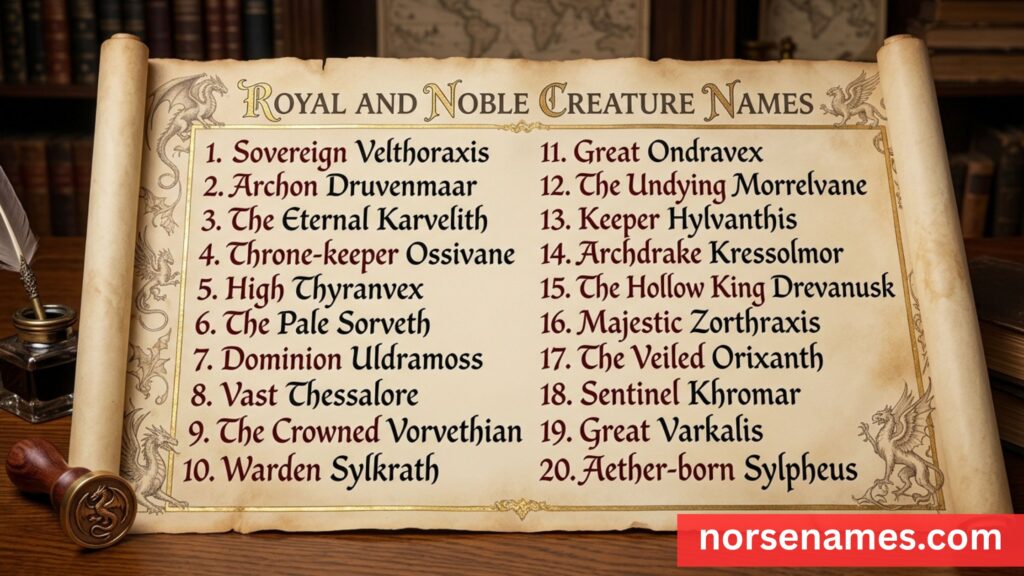
- Sovereign Velthoraxis
- Archon Druvenmaar
- The Eternal Karvelith
- Throne-keeper Ossivane
- High Thyranvex
- The Pale Sorveth
- Dominion Uldramoss
- Vast Thessalore
- The Crowned Vorvethian
- Warden Sylkrath
- Great Ondravex
- The Undying Morrelvane
- Keeper Hylvanthis
- Archdrake Kressolmor
- The Hollow King Drevanusk
Traditional and Classic Creature Names
Some creature names endure across generations because they capture the timeless spirit of fantasy itself. Traditional and classic creature names are built from ancient myths, medieval folklore, and legendary storytelling traditions that have shaped fantasy worlds for centuries. These names often carry a sense of power, mystery, and familiarity — making them perfect for dragons, beasts, monsters, spirits, and magical races that feel deeply rooted in old-world lore. Whether inspired by Norse sagas, Celtic legends, Gothic horror, or ancient mythologies, classic creature names help give your world a rich and believable history.
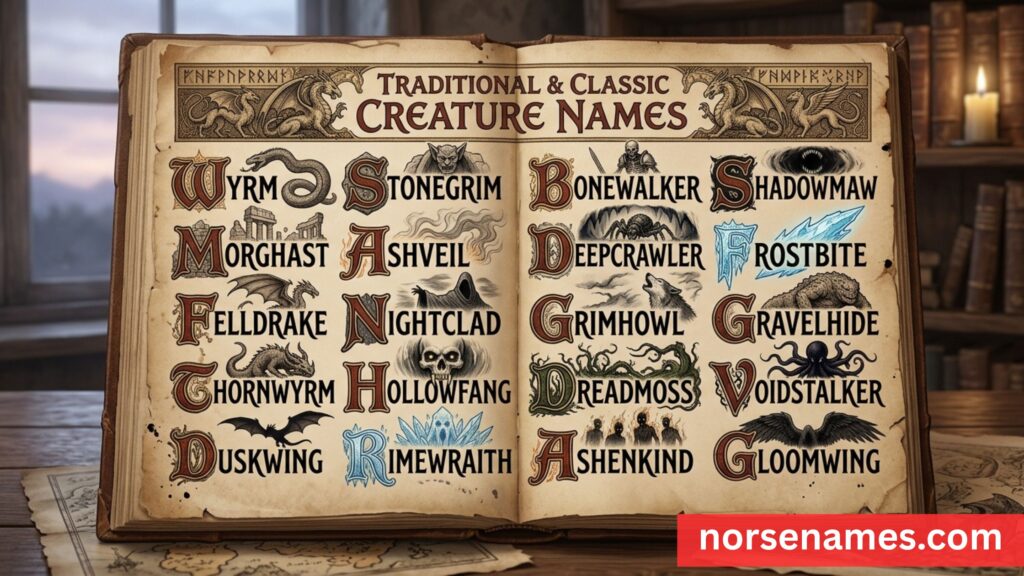
| Name | Origin Feel | Best Used For |
|---|---|---|
| Wyrm | Old English echo | Great serpents |
| Morghast | Archaic, crumbling | Undead giants |
| Felldrake | Classic beast title | Lesser dragons |
| Thornwyrm | Compound ancient | Burrowing predators |
| Duskwing | Visual + motion | Flying creatures |
| Stonegrim | Weight + character | Stone guardians |
| Ashveil | Decay + mystery | Fire remnants |
| Nightclad | Shadow + covering | Invisible stalkers |
| Hollowfang | Empty + predator | Plague creatures |
| Rimewraith | Cold + spirit | Ice ghosts |
| Bonewalker | Structure + motion | Undead walkers |
| Deepcrawler | Depth + movement | Abyss creatures |
| Grimhowl | Tone + action | Storm beasts |
| Dreadmoss | Feeling + nature | Swamp horrors |
| Ashenkind | Decay + species | Burned undead |
Creature Naming Traditions and Lore
In fantasy worldbuilding, creature names rarely emerge from nothing. The most believable bestiary entries carry naming traditions that feel like they evolved over centuries — because in the world you are building, they did.
The Sound of Fear. In many ancient cultures within fantasy settings, creatures are named after the sound they make, the sound they produce in their prey, or the sound their environment creates. A creature that stalks the Hollowfens might carry a name built from hollow, echoing phonemes — Ohveth, Yyrmath, Ullhask. This approach ties name to environment in an instinctive way.
Named by the Hunted. One of the richest naming traditions in fantasy lore is the idea that creatures do not name themselves — they are named by those who encounter them. A village that survives a single attack from a great black-winged beast calls it Skurveth, because that is what their language does to a thing that comes from the dark with no warning. The creature accepts no name. But the name persists.
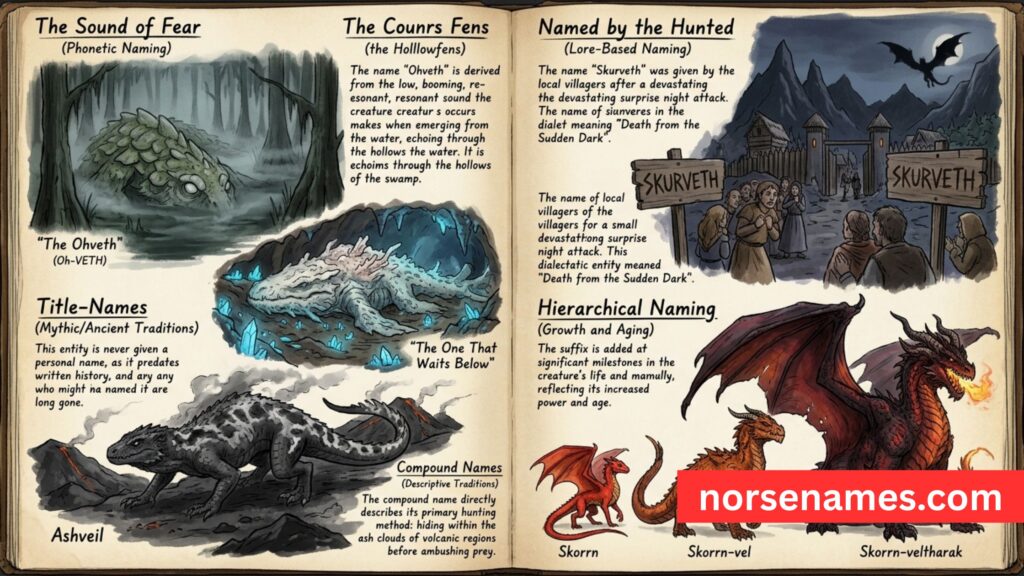
Title-Names. Some creatures, particularly ancient or godlike ones, are never given personal names at all. They are given titles that function as names — The Devourer, The Pale Horror, The One That Waits Below. This tradition exists in real mythologies and translates powerfully into fantasy. The absence of a personal name implies that no individual survives long enough to assign one.
Compound Names in Elder Traditions. Many fantasy traditions use compound naming for creatures, combining two concepts that describe what the creature does or is. Thornback. Rimejaw. Ashveil. Bloodmantle. These double-concept names carry an implicit narrative — they tell you at least two things about the creature before you read a single description.
Hierarchical Naming. In some worldbuilding frameworks, creature names change as the creature ages or grows in power. A young fire drake might be called Skorrn. As it matures, it becomes Skorrn-vel, and in its ancient form, Skorrn-veltharak. The name is a record of the creature’s history.
Creature Clan and Pack Names
In worlds where creatures form societies, hierarchies, or territorial units, clan and pack names become essential tools for worldbuilders and game masters alike. These names identify not just an individual creature, but a lineage, a territory, or a philosophy of predation.
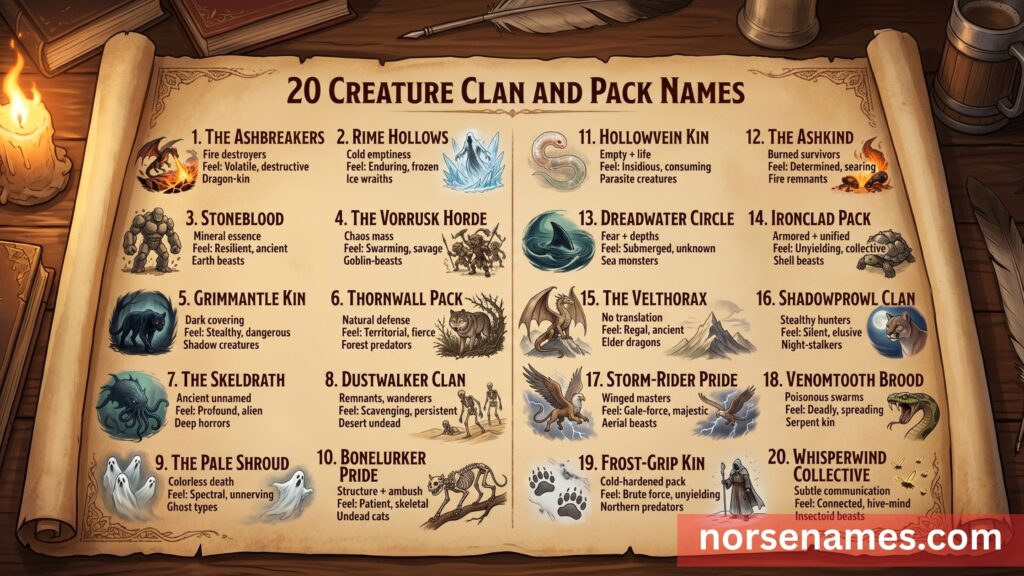
| Clan Name | Meaning Feel | Creature Type |
|---|---|---|
| The Ashbreakers | Fire destroyers | Dragon kin |
| Rime Hollows | Cold emptiness | Ice wraiths |
| Stoneblood | Mineral essence | Earth beasts |
| The Vorrusk Horde | Chaos mass | Goblin-beasts |
| Grimmantle Kin | Dark covering | Shadow creatures |
| Thornwall Pack | Natural defense | Forest predators |
| The Skeldrath | Ancient unnamed | Deep horrors |
| Dustwalker Clan | Remnants, wanderers | Desert undead |
| The Pale Shroud | Colorless death | Ghost types |
| Bonelurker Pride | Structure + ambush | Undead cats |
| Hollowvein Kin | Empty + life | Parasite creatures |
| The Ashkind | Burned survivors | Fire remnants |
| Dreadwater Circle | Fear + depths | Sea monsters |
| Ironclad Pack | Armored + unified | Shell beasts |
| The Velthorax | No translation | Elder dragons |
Creature Last Names and Compound Surnames
When a creature needs more than a name — when it needs a title, a lineage marker, or a compound identifier that signals its place in the world — compound surnames become the tool of choice. These work especially well for named monsters, legendary beasts referenced in lore, and creatures with enough sentience to carry a history.
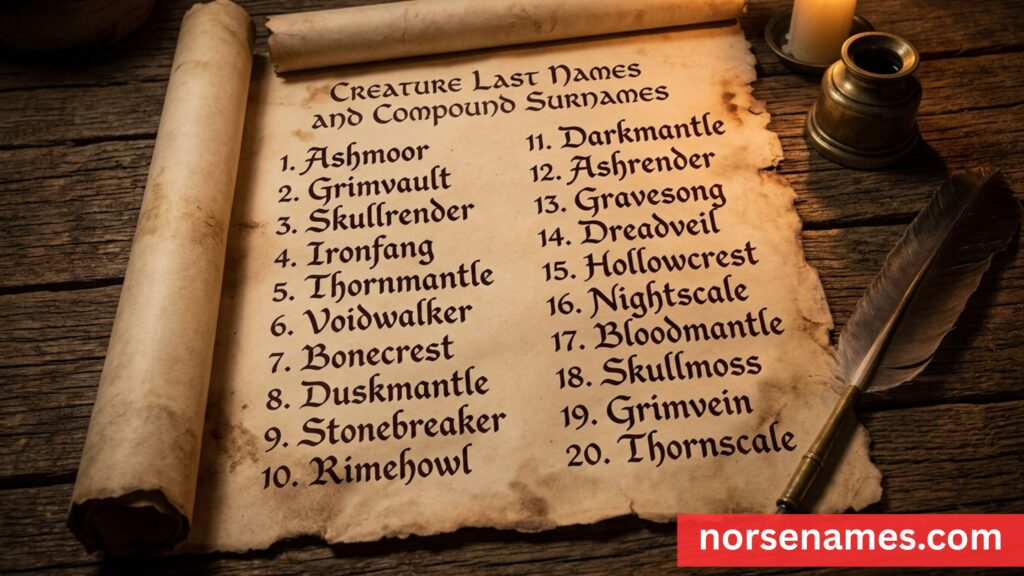
- Ashmoor
- Grimvault
- Skullrender
- Ironfang
- Thornmantle
- Voidwalker
- Bonecrest
- Duskmantle
- Stonebreaker
- Rimehowl
- Darkmantle
- Ashrender
- Gravesong
- Dreadveil
- Hollowcrest
- Nightscale
- Bloodmantle
- Skullmoss
- Grimvein
- Thornscale
- Ironshroud
- Ashvault
- Voidscale
- Boneshear
- Duskrender
- Stonemantle
- Rimefall
- Darkhowl
- Gravevein
- Hollowfang
- Nightrender
- Bloodcrest
- Ashgrim
- Thornvault
- Ironmoss
Creature Names Generator: Build Your Own Beast Identity
The best fantasy worlds are not built in a single sitting. They grow — name by name, creature by creature — until the bestiary feels less like a list and more like a living ecosystem. A creature names generator framework gives you the tools to construct original names on demand, without repeating yourself or borrowing too heavily from existing lore.
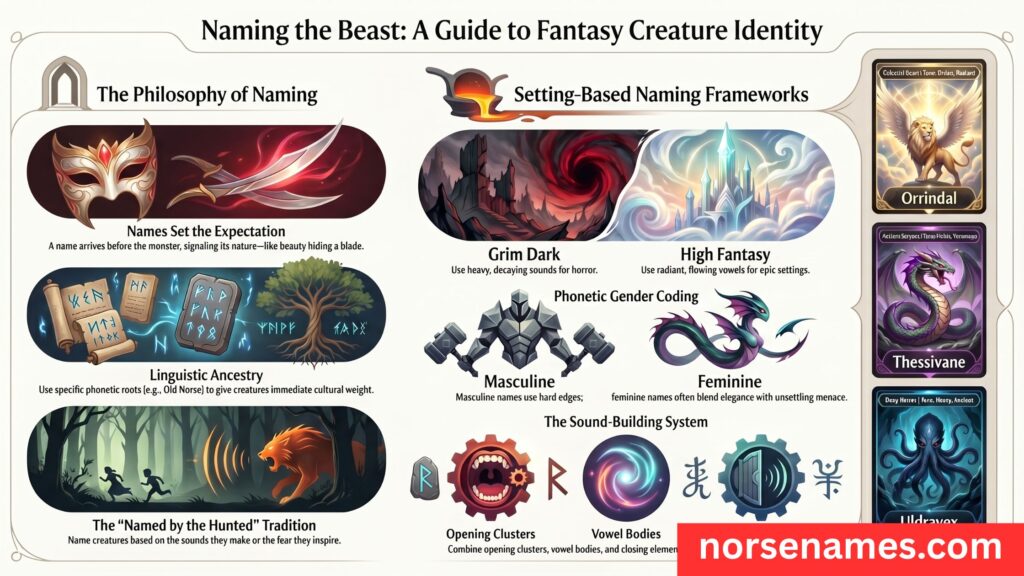
The system works through sound-building blocks. Combine an opening consonant cluster with a core vowel body and a closing element, and you have a name that feels native to your world rather than imported from someone else’s.
Opening Clusters: Vr, Sk, Dr, Th, Kr, Ny, Gh, Zv, Wr, Bl, Orm, Skr, Vel, Ash, Grim, Dusk, Thorn, Bone, Void, Rime
Core Vowel Bodies: aeth, orr, usk, iven, aveth, olm, arrak, essiv, yrvane, ulthar, ilmor, ornex, yveth, akkis, elvorn
Closing Elements: thar, vex, moor, rath, kine, vane, wrath, usk, fell, drax, moss, grim, vault, shade, reign
Combine freely across columns. Vr + aeth + thar becomes Vraethtар. Sk + orr + vex becomes Skorrvex. Thorn + yveth + fell becomes Thornyvethfell — which you can trim to Thornfell or Yvethfell depending on the weight you want the name to carry.
The goal is not randomness. The goal is consistency within your world’s sound rules. If your northern creatures use hard consonants and short vowels, keep that pattern across every creature born in that region. If your sea creatures carry long, rolling names with open vowel sounds, let the ocean echo in every syllable. A creature names generator is only as powerful as the rules you build around it.
Conclusion: The Art of Naming What Lurks in the Dark
Names are how the world remembers. Long after the battle is over, long after the kingdom has crumbled and the heroes have turned to legend, the names of the creatures that haunted those ages persist. They get carved into warning stones at the edges of roads. They get whispered by parents to children as reasons not to wander past the treeline after dark. They outlive everything except the stories themselves.
This guide has taken you through the full spectrum of creature naming — from the deep architecture of mythical creature names drawn from ancient traditions, to freshly forged fantasy creature name ideas built for worlds that have never existed before. You have explored male and female naming conventions, traced the mythical creatures list from A to Z, worked through a creature names generator framework, and absorbed the lore traditions that make naming feel like archaeology rather than invention.
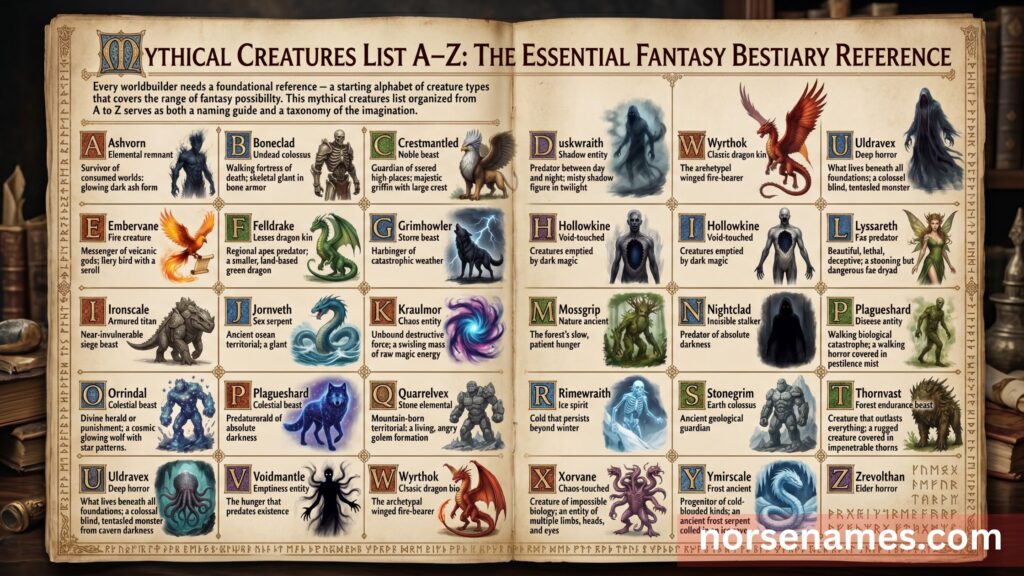
What ties all of it together is intention. The difference between a forgettable creature and a legendary one is rarely the monster’s abilities or its appearance. It is the name. Vorreth the Hollow does not need a detailed stat block to be frightening. Lyssaravan does not need a paragraph of physical description to feel dangerous. The name carries the weight. The name does the first and most lasting work.
Whether you are a novelist threading a great beast through the spine of your plot, a dungeon master watching your players go pale when you speak a single word across the table, or a worldbuilder filling the blank edges of your map with things that have no equals — your creatures deserve names that match their magnitude. Unique creature names for the ones that stand alone. Cool creature names for the ones that need to land with immediate impact. Ancient, mythological, compound, and title-names for the ones that have existed longer than anyone at the table can comprehend.
Fantasy creature name ideas are seeds. Plant them in your world with care, water them with consistent lore, and let them grow into the kind of mythology that readers return to. The creatures you name today could become the legends someone else references a generation from now — the way Smaug and Grendel and Jormungandr became touchstones for every writer who came after them.
Your bestiary is not just a list. It is a mythology in the making. Every name you choose is a declaration that this creature exists, that it matters, that the world is larger and stranger and more dangerous for its presence.
Name them well. Name them with purpose. And then send them out into the dark where they belong.